
My Story: Judy Leung
Charting the Course: My TechWomen4Boards Finalist Story
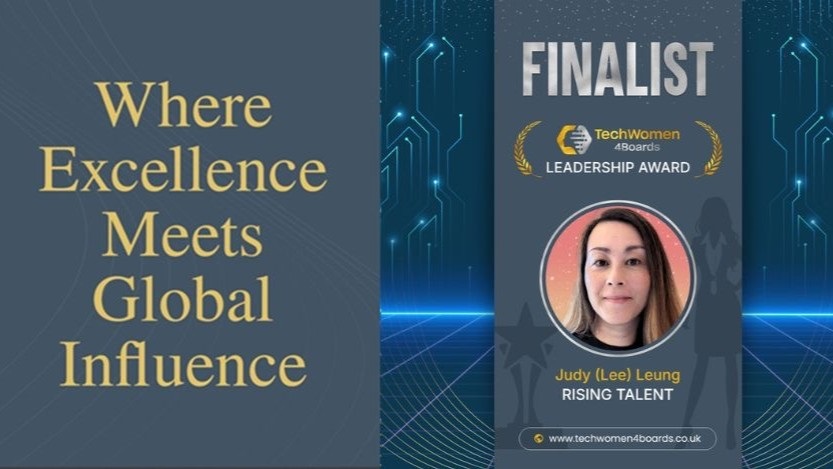
By Judy (Lee) Leung
There was no map. That’s the thing I kept coming back to. I was on a career break when I was asked to help build a startup in exchange for equity. The founder asking had a real idea and a real need, and I had skills and time despite raising a young family at the time, so the arrangement made sense, but when I started asking the obvious questions: What does this equity actually mean? How is it structured? What happens if things go wrong? I didn’t know where to turn. There was no standard framework, no education resource, no platform. I just had to hope that things would work out. That gap became Sweqlink.
I’d spent years before that leading project delivery at a digital agency, navigating competing priorities, managing stakeholders, turning ambiguous briefs into shipped work. I understood execution. What I hadn’t yet understood was ownership. This opportunity forced me to look at that differently. When I saw the problem with sweat equity arrangements up close: the opacity, the power imbalances, and the lack of infrastructure, but also the positive impact that sweat equity arrangements could have for founders and talent investors, I knew something had to be done about it. I built the map.
Sweqlink is a platform connecting early-stage founders with skilled professionals who want to contribute expertise for equity, not salary. We now have 700+ members, Innovate UK backing, and a UKRI Women in Innovation Award. But the thing I am most proud of is simpler: we made something legible that was previously invisible. Founders who couldn’t afford to hire traditionally now have a credible, structured way to build teams. Professionals who couldn’t invest capital can now invest skills and earn genuine ownership. The map exists.
Board ambition is, for me, a natural continuation of that same idea. Alongside building Sweqlink, I volunteer as Chapter Lead for Female Founders Rise Manchester and the North — and that work has only deepened my conviction that the voices who understand structural barriers to ownership belong in the room where strategy is set. Not as a token presence but as someone who has drawn their own map and can read someone else’s honestly.
My daughter is ten now. I think about what she will understand about building and owning and risk by the time she is ready to make those choices. I want to be part of the generation that charts that course for her properly.